Tornado Ride

This month marks a tragic anniversary for my home city. Forty years ago, on May 6, 1975, Omaha, Nebraska, was struck by a destructive tornado. I was thirteen then and remember the storm today, especially because it gave occasion for my first effort at writing a song.

On that day in 1975 I had arrived home from school when we heard the tornado sirens. My Mom was finishing the ironing and decided that she and my brother and I should take shelter. At the time she was not too concerned with the storm; she promptly put my brother and me to work cleaning when we reached the basement. My Dad, however, was out of town and worried about us. He knew we were in the tornado’s path, but he was not able to reach us.

We discovered later that the storm had been headed right for our house. We lived on Crown Pointe Ave, just up the hill from Orchard Park (I was attending Nathan Hale Junior High School). The tornado lifted near Benson Park and then went over our house. Though our house was spared, a large part of the city was devastated.

After seeing the damage done to the city, I imagined what it might have been like had the tornado hit our house like it did so many others. Imagination soon led to writing down the words of a song that I named Tornado Ride.

Below are the lyrics of the song and a recording that I made at the end of the summer of 1975 for my Dad (retrieved from an old cassette). It is the earliest recording I have of me singing and playing guitar.

Tornado Ride

Tornado Ride

Destruction and misery
Is all a tornado ever gave me

Tornados and twisters too
Kill and destroy are all they ever do
Tornados and twisters too
Better watch out when it’s coming through

Well, yesterday, everything was fine
And I was in school just wasting time
The bell finally rang and we got to go home
But we looked in the sky and black clouds did roam

Tornados and twisters too
Kill and destroy are all they ever do
Tornados and twisters too
Better watch out when it’s coming through

Well, I ran home as fast as I could
The weather was bad, not like it should
Sometimes it was hot and sometimes it was cold
In the sky a storm was clearly shown

When I got home, we ran down the stairs
Grabbed my radio, ‘cause we was mighty scared
Turned on the radio to hear what they’d say
But we ran and hid when it was coming our way

Tornados and twisters too
Kill and destroy are all they ever do
Tornados and twisters too
Better watch out when it’s coming through

Then all of a sudden we heard a loud sound
Looked up and saw the house come down
Then everything was calm, the tornado had passed
But we looked around and everything was smashed

Tornados and twisters too
Kill and destroy is all they ever do
Tornados and twisters too
Better watch out when it’s coming through

When I got up and saw all the rubble
Then I knew that we was really in trouble
So I looked around and started to shout
But I know it’s no use, so I climbed on out

Well, when I got out, the wind really blew
I needed help and didn’t know what to do
Along came the police and a rescue squad too
And the place was so wrecked it was hard to be true

Tornados and twisters too
Kill and destroy is all they ever do
Tornados and twisters too
Better watch out when it’s coming through

Well they took me to a motel and put me up for the night
And helped me all they could, ‘cause they knew I was in a fright
Then the next day we started to clean up
And find all we could in this terrible dump

Tornados and twisters too
Kill and destroy is all they ever do
Tornados and twisters too
Better watch out when it’s coming through

So my friends when it comes
You better go and hide
Unless you want to take a Tornado ride

Words and Music @1976 Kenneth Puls

I wrote the song early in May soon after the tornado struck and then shared it with my guitar teacher at one of my lessons. (I studied guitar with Leonard Mostek at his studio on Maple Street.) He liked it and entered me in an area talent show that summer called Show Wagon. I spent June of 1975 singing the song in several city parks in Omaha as part of Show Wagon.

Writing this song and having the opportunity to share with others was a defining moment for me. God used it in part to set the course of my life. Ten years after the tornado (after studying music theory and composition at the University of Nebraska at Omaha) I began what would be my life’s work, serving the church through music. For the past 30 years of ministry I have continued to write and arrange music, including many hymns and songs for worship. I am grateful for God’s protection in the storm in 1975, and grateful as well that through it I discovered an interest and joy in writing music. I have made it my aim to “praise the Lord as long as I live” (Psalm 146:2).

The cover art is from a charcoal drawing made by my daughter Anna Puls (2015). It includes the three TV towers at 72nd and Crown Pointe, not far from where I lived.

—Ken Puls

Pope and Pagan

In this light, therefore, he came to the end of the valley. Now I saw in my dream, that at the end of this valley lay blood, bones, ashes, and mangled bodies of men, even of pilgrims that had gone this way formerly; and while I was musing what should be the reason, I espied a little before me a cave, where two giants, POPE and PAGAN, dwelt in old time; by whose power and tyranny the men whose bones, blood, and ashes, &c., lay there, were cruelly put to death. But by this place Christian went without much danger, whereat I somewhat wondered; but I have learnt since, that PAGAN has been dead many a day; and as for the other, though he be yet alive, he is, by reason of age, and also of the many shrewd brushes that he met with in his younger days, grown so crazy and stiff in his joints, that he can now do little more than sit in his cave’s mouth, grinning at pilgrims as they go by, and biting his nails because he cannot come at them.

So I saw that Christian went on his way; yet, at the sight of the Old Man that sat in the mouth of the cave, he could not tell what to think, especially because he spoke to him, though he could not go after him, saying, “You will never mend till more of you be burned.” But he held his peace, and set a good face on it, and so went by and caught no hurt. Then sang Christian:

O world of wonders! (I can say no less),
That I should be preserved in that distress
That I have met with here! O blessed be
That hand that from it hath deliver’d me!
Dangers in darkness, devils, hell, and sin
Did compass me, while I this vale was in:
Yea, snares, and pits, and traps, and nets, did lie
My path about, that worthless, silly I
Might have been catch’d, entangled, and cast down;
But since I live, let JESUS wear the crown.

Pope and PaganNear the end of the Valley of the Shadow of Death, Christian sees strewn across the Way “blood, bones, ashes, and mangled bodies of men, even pilgrims that had gone this way formerly.” This horrific scene is the testimony of the persecuted church, those who have endured pain and trial for their faith in Christ and their stand for truth. The writer of Hebrews reminds us of those who have suffered and gained “a good testimony through faith.”

And what more shall I say? For the time would fail me to tell of Gideon and Barak and Samson and Jephthah, also of David and Samuel and the prophets: who through faith subdued kingdoms, worked righteousness, obtained promises, stopped the mouths of lions, quenched the violence of fire, escaped the edge of the sword, out of weakness were made strong, became valiant in battle, turned to flight the armies of the aliens. Women received their dead raised to life again.

Others were tortured, not accepting deliverance, that they might obtain a better resurrection. Still others had trial of mockings and scourgings, yes, and of chains and imprisonment. They were stoned, they were sawn in two, were tempted, were slain with the sword. They wandered about in sheepskins and goatskins, being destitute, afflicted, tormented—of whom the world was not worthy. They wandered in deserts and mountains, in dens and caves of the earth.
And all these, having obtained a good testimony through faith, did not receive the promise, God having provided something better for us, that they should not be made perfect apart from us.

Therefore we also, since we are surrounded by so great a cloud of witnesses, let us lay aside every weight, and the sin which so easily ensnares us, and let us run with endurance the race that is set before us, looking unto Jesus, the author and finisher of our faith, who for the joy that was set before Him endured the cross, despising the shame, and has sat down at the right hand of the throne of God (Hebrews 11:32 – 12:2).

The testimony of faithful believers is an encouragement for us to press on and keep our eyes fixed upon Christ. Bunyan was aware of the cost of following Christ. He was imprisoned for his faith, even as he was writing The Pilgrim’s Progress. His faith encouraged others, and he drew encouragement from those who had suffered before him. During his imprisonment at Bedford, his two possessions were his Bible and a copy of Foxe’s Book of Martyrs.

As Christian wonders at the ghastly sight before him, he sees a cave nearby. The cave represents the religious situation in England in Bunyan’s day and is home to some of the giants who menace pilgrims who seek the Celestial City. There are seven giants mentioned in The Pilgrim’s Progress (both Part 1 and Part 2) and each represents a great danger to believers. [*]

The first dweller in the cave was Pagan. England was formally a place of paganism with no light of the Gospel. Then Pope moved in and eventually Pagan died out. Giant Pope represents the Roman Catholic Church that sent missionaries to England and converted the land to its traditions. Both of these giants have been responsible for persecuting pilgrims and sending many to their death.

In Bunyan’s day, following the Protestant Reformation, with the rise of the Commonwealth and influence of the Puritans in England, the Roman Church had grown weak. Christian sees old Giant Pope sitting near the mouth of the cave taunting him as he goes past, but unable to cause him any harm. Though once powerful and formidable, the giant is now weak and feeble.

In Part 2 Pope no longer inhabits the cave and another giant, named Maul, has taken his place. Maul represents Anglicanism. He has a club that represents political power—power granted to the Church of England by the monarchy. With the club he gives blows to those who will not conform to his ways. Those blows took the form of laws passed between 1661 and 1671 in England designed to legalize persecution and suppress all meetings for non-conformists. Maul is defeated in Part 2 by Great Heart (an allusion to the Declaration of Liberty in 1672 and Act of Toleration in 1689).

Christian’s progress even in the face of giants is a reminder of God’s ultimate power and sovereignty over all our trials. God’s plan and purposes are always good, and they include every trial as well as every triumph. It is through trials that our faith is strengthened and our deliverance is made sweet. The Valley of the Shadow of Death was dark and difficult, yet Christian learned to trust God more fully and now leaves the valley with praises and singing. May God grant us such grace that we would learn to trust and praise Him in and through every trial.

* The seven giants in Bunyan’s allegory are Pagan, Pope and Maul (these three made their home in the cave), Despair and his wife Diffidence (whom Christian will encounter later in Part 1 at Doubting Castle), Slay-good (who terrorizes the land near the Inn of Gaius in Part 2), and Grim or Bloody-man (who lurks near Palace Beautiful in Part 2).

A Guide to John Bunyan’s The Pilgrim’s Progress
See TOC for more posts from this commentary

The text for The Pilgrim’s Progress and images used are public domain
Notes and Commentary ©2015 Ken Puls
Unless otherwise indicated, all Scripture quotations are from the New King James Version (NKJV) ©1982 by Thomas Nelson, Inc.

Psalm Inscriptions

Lessons from the Psalm Inscriptions: What Can We Learn?

Psalm Inscriptions

Lessons from the Psalm Inscriptions
In Leading God’s People in Prayer and Praise

Conclusion: What Can We Learn?

The psalm inscriptions offer a unique perspective on music and worship for the church musician. In this series we have examined the inscriptions under five categories:

I. DESIGNATION: Those titles using the Hebrew preposition לֹ lamed.  They can denote the author(s) of the psalm, the recipient(s) of the psalm, to whom the psalm is dedicated, or possibly whom the psalm is about.

II. DESCRIPTION: Titles that state the type of poetic genre or musical composition. [psalm, maschil, song, praise, prayer, testimony, michtam]

III. EXPLANATION: Titles that provide a historical connection for the psalm. They relate the circumstances surrounding the composition of the psalm.

IV. APPLICATION: Titles that indicate the liturgical, devotional or didactic use of the psalm. [For the Sabbath Day, To Bring Remembrance, Of the Ascents]

V. INTERPRETATION: Titles that explain how the psalm should be musically interpreted or performed. [On Flutes, With Stringed Instruments]

[Download a PDF list of Psalm Inscriptions highlighted by category]

The psalms set a precedent and paradigm for church music through the ages. Although a measure of uncertainty still surrounds the meanings of some of psalm inscriptions, they are a part of God’s revelation in Scripture and have relevance for the present day. God has given us enough light to reveal some of their purposes within the Psalter. Those who serve God with the gift of music can especially benefit from a knowledge of these headings.

So what can we learn from the Psalm inscriptions? How can they be useful and encouraging to us as we magnify God through music in the present day? Here, in summary, are ten lessons we have gleaned over the course of the study:

1. The psalm inscriptions reveal a wide range of poetic and musical forms found in the psalms. These include psalms, songs, prayers, praises, testimonies, michtams, maschils, and shiggaions. This diversity in the Psalter sets a precedent for the vast tapestry of poetic and musical forms used in worship throughout church history.

2. The psalm inscriptions display a wide range of usefulness for music in worship. The psalms shape and accompany much of the content of Old Testament worship. They not only function as musical compositions, but also as prayers, wisdom literature and liturgical texts. According to the inscriptions, the poetic and musical forms in the Psalter provide helpful structure for singing, playing music, celebrating (at a wedding), petitioning God (in time of need), praising God, giving thanks to God, grappling with injustice, repenting of sin and declaring faith in God as He is at work in the lives of His people.

3. The inscriptions and especially the psalm texts themselves show the wide range of emotional expression possible and appropriate for worship. From the deepest valleys of anguish and despair in Psalm 88, to the sorrow and grief of Psalm 51, up to the highest peaks of joy and praise that culminate in Psalm 150, the psalms demonstrate the unmatched ability and usefulness of music to express such emotion. Enoch Hutchinson in Music of the Bible explains:

“The essence of lyric poetry is the immediate expression of feeling; and feeling is the sphere in which most of the psalms move. Pain, grief, fear, hope, joy, trust, gratitude, submission to God, everything that moves and elevates the heart is expressed in these songs.” [1]

4. The psalm titles demonstrate the wide range of musical expression possible in worship. Many types of instruments are mentioned in the inscriptions including stringed instruments, flutes, an instrument of Gath, as well as a host of others mentioned in the texts of the psalms themselves (such as Psalm 150). Vocal forces include solos (individual praise and lament) to “everything that has breath.”

5. The psalm inscriptions highlight the connection between music and God’s work in human history. They link the psalms to real situations recorded in Scripture and actual worship practices of ancient Israel and the Temple. We sing the words penned by David and other Old Testament songwriters as they looked to God for strength and help. We join our voices with God’s people in past ages, singing the words that carried their praise and comforted their hearts. The psalms remind us that we are part of something much larger than what we see God doing in our lives today. We are part of God’s covenant promises and plan of redemption that has shaped all of human history since the Garden of Eden to the present day.

6. The psalm inscriptions intimate a place for personal expression (I and me) in music for worship. The psalms are the heartfelt and authentic cries of David, Asaph and other songwriters, expressing their petitions and praises, their thanksgivings and laments. Though many of the psalms began as individual expressions of worship, expressed in the first person (I and me), God’s people in all ages have identified with the psalms and found an affinity with their message. We sing the words of the psalmists as our own because they express common experiences and feelings, such as remorse over sin, repentance of sin, praise to God, thanks to God, and adoration of God. The psalms demonstrate that we can address God in personal and intimate ways, though corporately as the gathered people of God.

7. The psalm titles suggest a connection between the popular or familiar music of the culture and music in worship. The sound of the music in the Temple was not markedly distinct from the music of the people. Temple musicians borrowed from familiar tunes, styles and instruments of the day. The psalms set a precedent for the church throughout its history to harness the music of the world for the glory of God. This is evident in the New Testament as well. In Ephesians 5:19 and Colossians 3:16, alongside psalms, Paul lists hymns, a musical form borrowed from pagan culture, first used to honor false Greek and Roman gods, but now synonymous with music of the church.

8. The psalm inscriptions reveal that our worship of God should extend beyond our times of gathered worship. The Psalms of the Ascents (120–134) were sung by Israel as they journeyed to the Temple in anticipating of corporate worship. We see David and others lifting praise and crying out to God in many situations and circumstances, in times of joy and in times of need. We can pray and sing to God at any time and in any place and He will hear us and answer us.

9. The psalm titles set a precedent for care and planning for music in worship. The psalmists were careful to include instructions concerning how the psalms should be musically performed. This involved care in using appropriate instruments and tunings, care in using the psalms for appropriate occasions, and care in finding the right tune to fit with a certain text. The psalm titles teach us the value of being thoughtful and intentional in preparing for and leading worship.

10. The psalm titles highlight the value of ministry of those who compose, compile, plan and lead music in worship. They remind us to give thanks for songwriters, musicians and worship leaders in the church. We need to encourage them and pray for them. We need to pray that God will raise up more servants in the church who will use their musical gifts for His glory and benefit of His people.

For more on Music and Worship, see “What Then Shall We Sing?”

Part 1: Thoughts on Music
Part 2: Thoughts on Music and Worship
Grid for Evaluating Music

Note:
[1] Psalm 4, 6, 54, 55, 61.

This series is based on a seminar paper for “Special Research in Church Music” at Southwestern Baptist Theological Seminary (May 1995).

See a Table of Contents for this series: Lessons from the Psalm Inscriptions

(Scripture quotations are from the Holy Bible, English Standard Version (ESV) ©2001 by Crossway)

The Light of Day

And by and by the day broke; then said Christian, He has turned “the shadow of death into the morning.”

Now morning being come, he looked back, not out of desire to return, but to see, by the light of the day, what hazards he had gone through in the dark. So he saw more perfectly the ditch that was on the one hand, and the mire that was on the other; also how narrow the way was which led between them both; also now he saw the hobgoblins, and satyrs, and dragons of the pit, but all afar off, (for after break of day, they came not nigh;) yet they were discovered to him, according to that which is written, “He discovers deep things out of darkness, and brings out to light the shadow of death.”

Now was Christian much affected with his deliverance from all the dangers of his solitary way; which dangers, though he feared them more before, yet he saw them more clearly now, because the light of the day made them conspicuous to him. And about this time the sun was rising, and this was another mercy to Christian; for you must note, that though the first part of the Valley of the Shadow of Death was dangerous, yet this second part which he was yet to go, was, if possible, far more dangerous; for from the place where he now stood, even to the end of the valley, the way was all along set so full of snares, traps, gins, and nets here, and so full of pits, pitfalls, deep holes, and shelvings down there, that, had it now been dark, as it was when he came the first part of the way, had he had a thousand souls, they had in reason been cast away; but, as I said just now, the sun was rising. Then said he, “His candle shines upon my head, and by his light I walk through darkness.”

The Light of Day

Christian has had a long and difficult journey through the Valley of the Shadow of Death, but now the dawn is breaking. After being oppressed and confounded in the darkness, he welcomes the light of day with praise to God. He quotes from the book of Amos, acknowledging that God is the One who is sovereign over night and day, over darkness as well as light.

He made the Pleiades and Orion;
He turns the shadow of death into morning
And makes the day dark as night;
He calls for the waters of the sea
And pours them out on the face of the earth;
The Lord is His name
(Amos 5:8)

It is God who graciously sends the light:

Unto the upright there arises light in the darkness;
He is gracious, and full of compassion, and righteous.
(Psalm 112:4)

And exposes and uncovers the darkness.

He uncovers deep things out of darkness,
And brings the shadow of death to light.
(Job 12:22)

In Bunyan’s allegory the light represents the Word of God:

Your word is a lamp to my feet
And a light to my path.
(Psalm 119:105)

We are called to heed this Word as we walk through this dark world:

And so we have the prophetic word confirmed, which you do well to heed as a light that shines in a dark place, until the day dawns and the morning star rises in your hearts (2 Peter 1:19).

Early in his pilgrimage Christian was taught to prize and seek the light. When Evangelist first pointed Christian to the Wicket Gate (representing Christ as the Way to life), Christian could not yet see the Gate. Evangelist then directed him to “yonder Shining Light” (representing the Word of God). It is by God’s revealed Word that we see clearly the Way to salvation. It is God’s Word that points us to Christ, who is the Word made flesh (John 1:14) and the true Light of the world (John 1:9). When Isaiah prophesied of the coming of Jesus, he described it as the dawning of day across a land shrouded in the shadow of death:

The people who walked in darkness
Have seen a great light;
Those who dwelt in the land of the shadow of death,
Upon them a light has shined.
(Isaiah 9:2)

Isaiah’s refrain is echoed in the song of Zacharias when the prophecy is fulfilled at Jesus’ birth:

Through the tender mercy of our God,
With which the Dayspring from on high has visited us;
To give light to those who sit in darkness and the shadow of death,
To guide our feet into the way of peace.
(Luke 1:78–79)

If we are to find peace and hope in this life, we must find Christ. There is nothing more valuable as we face the darkness of this world than laying hold of Christ in His Word. In Christ there is life and light. In Christ we have nothing to fear. He is our strength and salvation.

The Lord is my light and my salvation;
Whom shall I fear?
The Lord is the strength of my life;
Of whom shall I be afraid?
(Psalm 27:1)

Throughout The Pilgrim’s Progress Bunyan has emphasized the necessity of reading and heeding God’s Word. The story opens with Christian reading his Book in a field, where it warned him to flee from the wrath to come. He was directed to follow its light as he sought a way of escape from Destruction. He heard valuable lessons for his journey when the Word was opened to him at the House of the Interpreter. He was taught to wield the Word as his sword in the armory of Palace Beautiful.

Now as light dawns in the Valley of the Shadow of Death, Bunyan highlights the importance of God’s Word for navigating the trials and temptations of this life. In the story, as the sun is rising, Christian gains a better perspective of what lies behind him as well as lies before him. He can better see the difficult trials he has just experienced and the dangers from which God has protected him. And he can better discern and anticipate what might lie ahead. The light gives him the advantage. In the light the fiends of the valley are driven back.

Likewise, in the light of God’s Word, we are better able to make sense of previous trials. And we are better prepared to face new trials. The light allows us to see the true nature of sin and temptation. In the light sin loses its power to allure and confuse us. We see it as abhorrent and conspicuous. In the light we see the ploys and perils of sin. We can better steer clear and avoid its entanglement. In the light we see the charm of this world fade and grow dim, outshined by the beauty and splendor of Christ. Nothing that sin or this world can offer us will ever compare to the joy of knowing Him. We need God’s Word to keep the light of Christ shining brightly on our path.

The light of day makes Christian both thankful and careful. He is grateful for all that God has brought him through and vigilant to stay clear of snares that would draw him away and threaten his soul. The Way is filled with danger. And even greater dangers lie ahead for Christian. But in God’s mercy the sun is rising and Christian can see the Way forward. As he presses on he recounts with Job “the days when God watched over me; when His lamp shone upon my head, and when by His light I walked through darkness” (Job 29:2–3).
May God help us always to seek and walk in the light of His Word:

Oh, send out Your light and Your truth!
Let them lead me;
Let them bring me to Your holy hill
And to Your tabernacle.
(Psalm 43:3)

A Guide to John Bunyan’s The Pilgrim’s Progress
See TOC for more posts from this commentary

The text for The Pilgrim’s Progress and images used are public domain
Notes and Commentary ©2015 Ken Puls
Unless otherwise indicated, all Scripture quotations are from the New King James Version (NKJV) ©1982 by Thomas Nelson, Inc.

Guitar and Clouds

Hymns for Classical Guitar

If you are a guitarist looking for music to play this Easter weekend, here are some suggestions. These hymn transcriptions are free downloads (PDF). They can be used for accompanying congregational singing, playing prelude or offertory music, or simply playing for your own enjoyment. Click on the hymn title to view or download the free sheet music.

Hymns for Good Friday

Alas! And Did My Savior Bleed

O Sacred Head Now Wounded

There Is a Fountain Filled with Blood

When I Survey the Wondrous Cross

Hymns for Easter

Crown Him With Many Crowns

Christ the Lord Is Risen Today (EASTER HYMN)

Look Ye Saints, the Sight Is Glorious

Thine Is the Glory

You are welcome to copy and share these hymns with friends and fellow guitar enthusiasts. Please copy the full page with the website address and the “Used by Permission” notice at the bottom (see Permissions).

For additional music, check out:

Hymns for Classical Guitar

Christmas Music for Classical Guitar

More Music for Classical Guitar

Guitar and Clouds

Lessons from the Psalm Inscriptions: Titles of Interpretation

Played by Flutes

Lessons from the Psalm Inscriptions
In Leading God’s People in Prayer and Praise

Titles of Interpretation

The inscriptions included at the beginning of many of the psalms offer valuable instruction for church musicians. They provide brief glimpses of the worship practices of ancient Israel and the Temple. In earlier posts we considered four categories of titles: designation, description, explanation and application. The final category of psalm inscriptions is interpretation.

Thirteen inscriptions included in the first three books of the Psalter relate to interpretation, clarifying how the psalm was musically performed or sung. These inscriptions always follow the designation to the chief musician (lamnatstsech). Although these headings are the most difficult of the five types to satisfactorily understand and adequately translate, they include terms that most likely denote musical instrumentation, voicings, melody or tune names, and musical styles. All but one use the preposition ‘al meaning upon or according to or the proposition b meaning with.

Instrumentation

Three of the headings appear to indicate musical instrumentation. They refer to stringed instruments, flute or wind instruments, and an unknown instrument of Gath.

With Stringed Instruments

An instruction to perform with stringed instruments appears in five psalms. [1] The singular with a stringed instrument occurs in two psalms. [2]

The Hebrew inscription binginoth consists of the preposition b meaning with or on and the plural form of the noun neginoth. Neginoth comes from the root nagan meaning to touch (strings) or to play a stringed instrument. [3] Most modern versions translate the inscription as with stringed instruments or simply for strings. The KJV leaves the term untranslated as on Neginoth.

Stringed instruments were especially important for the accompaniment of the psalms in the Temple worship, as Edersheim explains:

That music was chiefly sustained by the harp (Kinnor) and the lute (Nevel). Of the latter (which was probably used for solos) not less than two nor more than six were to be in the Temple orchestra; of the former, or harp, as many as possible, but never less than nine. There were, of course, several varieties both of the Nevel and the Kinnor. The chief difference between these two kinds of instruments lay in this, that in the Nevel (lute or guitar) the strings were drawn over the sounding-board, while in the Kinnor they stood out free, as in our harps. [4]

Idelsohn adds: “These two instruments were the most important ones, without which no public religious ceremony could be held.” [5]

Upon Flutes

The inscription el-hanechiloth occurs only in Psalm 5. It consists of the preposition el meaning upon and the plural form of the noun nechilah which most likely denotes a flute. [6] Most modern versions translate the heading as for flute accompaniment or simply for flutes. As with neginoth the KJV leaves this term untranslated, upon Nehiloth.

Flutes were primarily used on special occasions and festivals in the worship of Israel, including Passover, Pentecost, and the Feast of Tabernacles. [7] According to Edersheim, “the flute was also used by the festive pilgrim-bands on their journey to Jerusalem, to accompany ‘the Psalms of Degrees,’ or rather of ‘Ascent,’ sung on such occasions.” [8] This heading does not appear on any of the Songs of Ascent, however, all of the psalms in Book V lack titles of application.

When flutes were used in the Temple, they were highlighted as solo instruments as Edersheim notes:

In the Temple, not less than two nor more than twelve flutes were allowed, and the melody was on such occasions to close with the notes of the flute alone. [9]

Upon the Gittith

The instruction ‘al-hagitith appears in three psalms. [10] The Hebrew phrase consists of the preposition upon ( ‘al), the definite article h and an uncertain term gittith.

The term gittith most likely refers to a musical instrument named after the Philistine city of Gath. [11] David spent time in Gath when he was fleeing from Saul (1 Samuel 21:10–15). He would have been aware of their musical practices. Kraus suggest, however, that the term “probably refers to a melody” and should be rendered according to the Githitic (tune). [12] The KJV, NAS, NIV, ESV and NRSV all leave the term untranslated. The NKJV has on the instrument of Gath.

Voicings

The two headings indicating a certain voicing or tuning of the stringed instruments are the first of the headings to appear in Scripture outside the Psalter. They are found in 1 Chronicles 15:20 and 21 where David prepares to bring the ark to Jerusalem and appoints Levites to oversee the worship of God.

The singers, Heman, Asaph, and Ethan, were to sound bronze cymbals; Zechariah, Aziel, Shemiramoth, Jehiel, Unni, Eliab, Maaseiah, and Benaiah were to play harps according to Alamoth; but Mattithiah, Eliphelehu, Mikneiah, Obed- edom, Jeiel, and Azaziah were to lead with lyres according to the Sheminith. Chenaniah, leader of the Levites in music, should direct the music, for he understood it (1 Chronicles 15:19–22).

The use of the inscriptions in this historical context reveals that they are ancient, going back at least to the beginning of David’s reign as king.

According to Sheminith

The heading ‘al-hasheminith occurs in Psalms 6 and 12. The term is unclear, but likely instructs the instrumentalist to tune to or play in a lower key.

The KJV, NIV, ESV and NRSV leave the term untranslated. NKJV has on an eight-stringed harp. The NAS has upon an eight-stringed lyre. Klein suggests two possible meanings: a musical instrument probably of 8 strings or an octave. [13] Peter Craigie, in his commentary, renders it upon the octave implying a lower tuning or bass accompaniment, which, he says, “would be appropriate to the solemn theme of the psalm.” [14]

According to Alamoth

A similar heading to sheminith occurs in Psalm 46, ‘al-‘alamoth. This term is also uncertain, but is likely a compliment to sheminith, especially in light of their use in 1 Chronicles 15:20–21. Alamoth, therefore, would denote a tuning to or playing in a higher key.

The KJV, NKJV, NAS, NIV, ESV and NRSV all leave the term untranslated. Klein refuses to speculate on this term saying it is “of uncertain origin and meaning.” [15]

Melodies

At least seven headings in the psalms suggest the use of pre-existing tunes or well-known melodic patterns to perform the psalm. Idelsohn explains the role of these tunes in Israel’s worship:

The vocal song of the Temple, like all religious song among the ancient and primitive nations, drew its sap from the folk song, though foreign tunes may have occasionally crept in. These Temple songs—folk-tunes modified and sanctified—were in turn copied by the ‘representatives of the people,’ the Anshe Maamad, from all parts of the country, who learned the melodies together with the texts, and would carry them to their homes. [16]

Curt Sachs further clarifies the use of these melodic patterns:

Oriental music has always been, and still is, composed in well-defined designs or melodic patterns. These melodic patterns might be compared to the three Greek orders or styles in architecture, the composition of which had detailed rules with which the artist was compelled to comply, and only within these specifications could he follow his personal interpretation. In music, melodies using the same scale, and relating to each other by their general mood, belong to one melodic pattern. [17]

According to Aijeleth Hashachar

The tune Aijeleth Hashachar is found only with Psalm 22. The KJV and NAS leave the title untranslated, but other versions have spawned a number of suggested translations. These include: The Deer of the Dawn (NKJV and NRSV), The Doe of the Morning (NIV), and Doe of the Dawn (ESV).

According to Jonath Elem Rechokim

The title ‘al-Jonath Elem Rechokim occurs only in Psalm 56. The terms in the heading are uncertain and have produced a number of various translations: The Silent Dove in Distant Lands (NKJV), A Dove on Distant Oaks (NIV), The Dove on Far Off Terebinths (NRSV and ESV). The KJV and NAS leave the title untranslated.

According to Shoshannim

The inscription ‘el-shoshannim means literally upon Lilies. Of the seven inscriptions that likely refer to tune names or melodic patterns, this one presents the most difficulty. It occurs in three psalms, 45, 69, and 80. Psalm 45 is a song of love replete with praise and adoration. Psalm 80, however, is a lament containing a refrain that pleads with God for revival. It seems improbable that two psalms of such different character could be performed with the same musical setting.

The phrase is literally translated as Lilies (NKJV, NIV, NRSV, and ESV). The KJV and NAS leave the title untranslated.

According to Shushan Eduth

The title ‘al-shushan appears only in Psalm 60. Although the term ‘eduth meaning a testimony is often included as part of the tune name, it should be considered as a separate title of description, as in the heading to Psalm 80. The title ‘al-shushan consists of the preposition according to (‘al) and the noun lily (shushan) which appears in the plural form in Psalm 45, 69, and 80. Commentators who attached ‘eduth to this title assume unnecessarily that the noun shushan is in the Construct state and must be linked with the following term. The translation of the title should read, however, to the tune “A Lily.”

The KJV, NAS and ESV leave the title untranslated. Translated tune names include: Lily of the Testimony (NKJV) and The Lily of the Covenant (NIV and NRSV).

According to Muth-labben

The heading ‘almuth labben occurs only in Psalm 9 (Psalm 10 is a continuation of this psalm and does not have its own heading.) Owen suggests that the title derives from the words ben meaning son and ‘almah meaning young woman. He translates the performance instruction as soprano voice of boys. [18] Other scholars suggest the first word in the title relates to the Hebrew root muth meaning to die. [19]

The KJV, NAS, ESV and NRSV leave the title untranslated. NKJV and NIV translate the name of the tune as Death of the Son.

According to Machalath (Leannoth)

The title of Psalm 53 uses the uncertain term machalath with the preposition according to (‘al); Psalm 88 uses both machalath le‘annoth introduced by according to (‘al). Marvin Tate says in his commentary that the phrase is “assumed to be a tune or chanting pattern to be used with the psalm.” [20] The KJV, NKJV, NAS, NIV, ESV and NRSV leave the terms untranslated, implying this possibility.

Do Not Destroy

The heading ’al-tashcheth appears in four psalms. [21] It consists of the negative particle ’al and the Hiphil (causative active) form of the verb shachath meaning to spoil, ruin, or wipe out. [22] The KJV and NAS leave the title untranslated. The NKJV, NIV, NRSV, and ESV all translate the title as Do not Destroy.

The inscription may relate to Moses’ words in Deuteronomy 9:26, or David’s words in 1 Samuel 26:9, or more likely, to the words of a song recorded in Isaiah 65:8 which begins:

Thus says the Lord:
“As the new wine is found in the cluster,
and they say, ‘Do not destroy it,
for there is a blessing in it,’
so I will do for my servants’ sake,
and not destroy them all.”

Marvin Tate explains:

The “do not destroy it” expression seems to have been a popular saying or proverb which reflected the idea of a vineyard keeper refusing to destroy grape-vines when the first clusters of grapes were bad. The vines still had the blessing of life in them and a potential for future production. Like the vines, Israel had brought forth the grapes worthy of destruction but Yahweh would not destroy Israel because she still contained a blessing (cf. Isa 28:23-28). [23]

Styles

According to Jeduthun

This heading referring to Jeduthun, one of David’s chief musicians, appears in two psalms (62 and 77). Jeduthun’s name also appears in a title of designation (with the preposition  לֹ) in Psalm 39. Tate suggests that the title in Psalm 62 and 77 employing the preposition ‘al may be “referring to a tune or musical setting, according to which the psalm was to be sung.” [24] The Hebrew preposition, however, is best translated here as according to. [25] Kraus suggests the proper rendering “After the manner of Jeduthun’s music making,” [26] denoting a particular style for which Jeduthun was known.

Conclusion

Although the titles of interpretation are the most difficult to translate, they do shed some light on the use of music in worship.

First, the titles indicate a measure of thoughtfulness and planning in the preparation and performance of music. The musicians who served in the Temple were intentional in choosing what instruments were used (strings, flutes, and even an instrument of Gath) and the key or tuning of the musical setting (lower or higher). They used specific melodic patterns or tunes to accompany certain psalms. They even used the musical settings or styles of particular composers (as with Jeduthun). The titles of application serve to remind us to put thought and care into the planning of music for worship.

Second, the titles also suggest a rich crossover between the music of the Temple and the popular music of the people (sung in homes, in the fields and in other cultural settings). Temple musicians borrowed from well-known or popular settings; they included melodic patterns that were familiar to the people. This is a point worth noting. There are some who have concluded that sacred music (music used in the worship of God) should have a decidedly distinct sound or style from secular music (music used for other purposes in the world). The psalm inscriptions, however, suggest that the musical style and arrangement of sacred and secular are not so markedly separate.

In the New Testament Paul provides a paradigm for church music that encompasses a vast array of musical sounds and styles down through history and around the world. We are to sing “psalms and hymns and spiritual songs” (Ephesians 5:19, Colossians 3:16) to the glory of God. The music of the church begins with the psalms, rooted in the worship of ancient Israel. But even in the psalms we see the beginnings of the varied sounds of praise in worship. Along with popular melodic patterns accompanying some of the psalms, we see remarkably, instructions to use an instrument (or possibly a tune) from Gath. A part of the musical tradition from a city of the Philistines, one of Israel’s enemies, is selected and sanctified for use in worship.

The psalms set a musical precedent for worship that God will accomplish in fuller measure in the New Testament through the church. Throughout church history, God has added and continues to add many musical styles and sounds to His praise. As the gospel goes out in the power of God’s Spirit, conquering hearts and lives, people from each generation and from every tribe and tongue and nation add their voice to the music of the church. There is not one sound that is solely sacred, but a vast array of musical composition that God is weaving into a tapestry of praise for His glory.

Notes:
[1] Psalm 4, 6, 54, 55, 61.
[2] Psalm 67, 76.
[3] The New Brown–Driver–Briggs–Gesenius Hebrew and English Lexicon [BDB], 618.
[4] Alfred Edersheim, The Temple: Its Ministry and Services (New York: F. H. Revell, 1874; reprint, Grand Rapids, MI: William B. Eerdmans Publ. Co., 1987), 78-79.
[5] Abraham Z. Idelsohn, Jewish Music: Its Historical Development (New York: Henry Holt and Company, 1929; reprint, New York: Dover Publications, 1992), 8.
[6] John Joseph Owens, Analytical Key to the Old Testament (Grand Rapids, Mich.: Baker Book House, 1992), 3:263.
[7] Edersheim, The Temple, 79-80.
[8] Edersheim, The Temple, 80.
[9] Edersheim, The Temple, 80.
[10] Psalm 8, 81, 84.
[11] Ernest Klein, A Comprehensive Etymological Dictionary of the Hebrew Language for Readers of English. (New York, MacMillian Publishing Company, 1987), 111.
[12] Hans-Joachim Kraus, Psalm 1–59: A Commentary, trans. Hilton C. Oswald (Minneapolis, MN: Augsburg, 1988), 31.
[13] Klein, Etymological Dictionary, 666.
[14] Peter C. Craigie, Psalm 1-50, Word Biblical Commentary, eds. David A. Hubbard, et al., vol. 19 (Waco, TX: Word Books, 1983), 90.
[15] Klein, Etymological Dictionary, 473.
[16] Idelsohn, Jewish Music, 20.
[17] Curt Sachs, The History of Musical Instruments (New York: W. W. Norton and Co., 1940), 126.
[18] Owen, Analytical Key to the Old Testament, 3:269.
[19] Klein, Etymological Dictionary, 327.
[20] Marvin E. Tate, Psalm 51-100, Word Biblical Commentary, eds. David A. Hubbard, et al., vol. 20 (Dallas, Texas: Word Books, 1990), 394.
[21] Psalm 57, 58, 59, 75.
[22] William L. Holladay, A Concise Hebrew and Aramaic Lexicon of the Old Testament (Grand Rapids, MI: William B. Eerdmans Publ. Co., 1988), 366.
[23] Tate, Psalm 51-100, 77.
[24] Tate, Psalm 51-100, 120.
[25] Tate, Psalm 51-100, 120.
[26] Kraus, Psalms 1-59: A Commentary, 30. See also BDB, 393.

This series is based on a seminar paper for “Special Research in Church Music” at Southwestern Baptist Theological Seminary (May 1995).

See a Table of Contents (thus far) for this series: Lessons from the Psalm Inscriptions

(Scripture quotations are from the Holy Bible, English Standard Version (ESV) ©2001 by Crossway)

Christian Confounded

About the midst of this valley, I perceived the mouth of hell to be, and it stood also hard by the wayside. Now, thought Christian, what shall I do? And ever and anon the flame and smoke would come out in such abundance, with sparks and hideous noises, (things that cared not for Christian’s sword, as did Apollyon before), that he was forced to put up his sword, and betake himself to another weapon called All-prayer. So he cried in my hearing, “O Lord, I beseech thee, deliver my soul!” Thus he went on a great while, yet still the flames would be reaching towards him. Also he heard doleful voices, and rushings to and fro, so that sometimes he thought he should be torn in pieces, or trodden down like mire in the streets. This frightful sight was seen, and these dreadful noises were heard by him for several miles together; and, coming to a place where he thought he heard a company of fiends coming forward to meet him, he stopped, and began to muse what he had best to do. Sometimes he had half a thought to go back; then again he thought he might be half way through the valley; he remembered also how he had already vanquished many a danger, and that the danger of going back might be much more than for to go forward; so he resolved to go on. Yet the fiends seemed to come nearer and nearer; but when they were come even almost at him, he cried out with a most vehement voice, “I will walk in the strength of the Lord God!” so they gave back, and came no further.

One thing I would not let slip. I took notice that now poor Christian was so confounded, that he did not know his own voice; and thus I perceived it. Just when he was come over against the mouth of the burning pit, one of the wicked ones got behind him, and stepped up softly to him, and whisperingly suggested many grievous blasphemies to him, which he verily thought had proceeded from his own mind. This put Christian more to it than anything that he met with before, even to think that he should now blaspheme him that he loved so much before; yet, if he could have helped it, he would not have done it; but he had not the discretion either to stop his ears, or to know from whence these blasphemies came.

When Christian had traveled in this disconsolate condition some considerable time, he thought he heard the voice of a man, as going before him, saying, “Though I walk through the valley of the shadow of death, I will fear no evil, for thou art with me.”

Then he was glad, and that for these reasons:

First, Because he gathered from thence, that some who feared God were in this valley as well as himself.

Secondly, For that he perceived God was with them, though in that dark and dismal state; and why not, thought he, with me? though, by reason of the impediment that attends this place, I cannot perceive it.

Thirdly, For that he hoped, could he overtake them, to have company by and by. So he went on, and called to him that was before; but he knew not what to answer; for that he also thought to be alone.

Christian ConfoundedAs Christian continues his dark journey through the Valley of the Shadow of Death, his trouble only deepens. When he reaches the middle of the valley he comes near the mouth of hell and here he is tormented with voices of terror and temptation. He feels threatened and senses that both fiends (alluring him into sin) and flames (threatening him with judgment) are coming after him.
Christian is so confounded that he is no longer able to wield his sword. There is nothing identifiable in his thinking upon which he can bring truth to bear. And so he turns to another weapon of spiritual warfare: All-Prayer.

… praying always with all prayer and supplication in the Spirit, being watchful to this end with all perseverance and supplication for all the saints (Ephesians 6:18).

He cries out to the Lord with the words of Psalm 116:4

Then I called upon the name of the LORD:
“O LORD, I implore You, deliver my soul!”
(Psalm 116:4)

Oppression so overwhelms him that he finds himself perplexed and unsure how to proceed. He considers going back, but then remembers how far he has already come. He has already seen victories over sin and Satan. Going back would likely be more dangerous than pressing forward. Retreat would only set him on the path toward dangers and snares he had already passed. Christian’s resolve is to take courage and press on. Though he is no match for the valley in his own cunning and power, he is determined to “walk in the strength of the Lord God.”

Finally, my brethren, be strong in the Lord and in the power of His might (Ephesians 6:10).

Bunyan describes the valley as dark and confusing. Christian hears voices whispering blasphemies and temptations, but their source is uncertain. He becomes so confused that he even begins to doubt his own testimony and can’t recognize his own voice. In the Valley of Humiliation the enemy was clear. Apollyon stood against him and Christian stood his ground. But now in this valley the enemy is unclear and clandestine. When Christian searches for his foe, it appears to be within his own mind, maybe even himself. He is perplexed and grieved that he could be thinking such wicked thoughts.

This was Bunyan’s testimony as he sought to follow Christ. He describes his own dark days in his autobiography, Grace Abounding, how he was assaulted by discontent and blasphemous thoughts:

For, about the space of a month after, a very great storm came down upon me, which handled me twenty times worse than all I had met with before; it came stealing upon me, now by one piece, then by another: First, all my comfort was taken from me; then darkness seized upon me; after which, whole floods of blasphemies, both against God, Christ, and the scriptures, were poured upon my spirit, to my great confusion and astonishment. These blasphemous thoughts were such as stirred up questions in me against the very being of God, and of His only beloved Son: As, whether there were in truth, a God or Christ? And whether the Holy Scriptures were not rather a fable, and cunning story, than the holy and pure word of God?
[Grace Abounding to the Chief of Sinners, par. 96]

Like Christian in The Pilgrim’s Progress, Bunyan was fearful and distressed that such terrible thoughts would come from within himself.

Now I thought, surely I am possessed of the devil: at other times, again, I thought I should be bereft of my wits; for instead of lauding and magnifying God the Lord, with others, if I have but heard Him spoken of, presently some most horrible blasphemous thought or other would bolt out of my heart against Him; so that whether I did think that God was, or again did think there was no such thing, no love, nor peace, nor gracious disposition could I feel within me.

These things did sink me into very deep despair; for I concluded that such things could not possibly be found amongst them that loved God. I often, when these temptations had been with force upon me, did compare myself to the case of such a child, whom some gipsy hath by force took up in her arms, and is carrying from friend and country. Kick sometimes I did, and also shriek and cry; but yet I was bound in the wings of the temptation, and the wind would carry me away. I thought also of Saul, and of the evil spirit that did possess him: and did greatly fear that my condition was the same with that of his (1 Samuel 10).
[Grace Abounding to the Chief of Sinners, par. 101–102]

Bunyan doubted his own faith and mistakenly believed that he was alone in his struggle against sin and the devil.

And now my heart was, at times, exceeding hard; if I would have given a thousand pounds for a tear, I could not shed one: no nor sometimes scarce desire to shed one. I was much dejected, to think that this would be my lot. I saw some could mourn and lament their sin; and others again, could rejoice and bless God for Christ; and others again, could quietly talk of, and with gladness remember the word of God; while I only was in the storm or tempest. This much sunk me, I thought my condition was alone, I should therefore much bewail my hard hap, but get out of, or get rid of these things, I could not.

While this temptation lasted, which was about a year, I could attend upon none of the ordinances of God, but with sore and great affliction. Yea, then I was most distressed with blasphemies. If I had been hearing the word, then uncleanness, blasphemies and despair would hold me a captive there: if I have been reading, then sometimes I had sudden thoughts to question all I read: sometimes again, my mind would be so strangely snatched away, and possessed with other things, that I have neither known, nor regarded, nor remembered so much as the sentence that but now I have read.
[Grace Abounding to the Chief of Sinners, par. 105–106]

One of Satan’s great ploys is to make us feel unique in our sin and isolated in our suffering. No one can understand what we are facing; no one can possibly bear the sorrows we are carrying; no one can think what we are thinking and be a true follower of Jesus! But God’s Word teaches us otherwise:

No temptation has overtaken you except such as is common to man; but God is faithful, who will not allow you to be tempted beyond what you are able, but with the temptation will also make the way of escape, that you may be able to bear it (1 Corinthians 10:13).

One of God’s great gifts is to give us brothers and sisters in the faith to walk with us and encourage us. As Christian walks downcast through the valley, he hears ahead of him the voice of another pilgrim quoting the Word of God.

Yea, though I walk through the valley of the shadow of death,
I will fear no evil;
For You are with me;
Your rod and Your staff, they comfort me.
(Psalm 23:4)

This makes Christian glad for three reasons:

1. He realizes that he is not alone in the valley. Others are facing the same trials and temptations as he, and are trusting in God for help and comfort.

2. He realizes that God is with him and watching over him even though he cannot perceive it. Job says of God:

He does great things past finding out,
Yes, wonders without number.
If He goes by me, I do not see Him;
If He moves past, I do not perceive Him
(Job 9:10–11)

We don’t have to be alert and aware for God to be at work. Even when we are confounded and dismayed, He is still sovereign and in control. Even when we are downcast and uncertain, He remains strong and faithful.

3. Christian realizes that a fellow pilgrim is close by. He can gain the blessing of company and consolation if he can meet up with his brother. Christian calls out to get the other’s attention, but hears no answer. The other pilgrim is yet out of sight and believes himself to be alone in the valley as well.

The Valley of the Shadow of Death teaches us an important lesson about the Christian life. It is possible for believers, who are following the Way and walking according to God’s will, to go through dark and difficult days. They may go through times, even seasons, of severe oppression and trial. The valley can be long. Christian plods on for “several miles” and is disconsolate “for some considerable time.” How are we to follow Christ when the days are dark and we are so confounded and perplexed, we don’t know what to do? In those times we must not look to our own strength and understanding. We must walk as Christian, praying always and pressing on in the strength of the Lord. As we walk by faith, trusting in the promises of God’s Word, we will be encouraged. And though we may not see it, in God’s kindness, our perseverance might be an encouragement to others to press on as well.

A Guide to John Bunyan’s The Pilgrim’s Progress
See TOC for more posts from this commentary

The text for The Pilgrim’s Progress and images used are public domain
Notes and Commentary ©2015 Ken Puls
Unless otherwise indicated, all Scripture quotations are from the New King James Version (NKJV) ©1982 by Thomas Nelson, Inc.

Psalm TItles

Lessons from the Psalm Inscriptions: Titles of Application

Song of Ascents

Lessons from the Psalm Inscriptions
In Leading God’s People in Prayer and Praise

Titles of Application

The inscriptions included in the book of Psalms provide helpful insights into the composition and usefulness of psalms in the worship of God’s people. Thus far in our study of the psalm inscriptions we have examined headings related to designation, description and explanation. The fourth category is application.

Eight inscriptions concern the application of the psalms. Twenty-three psalms in the Psalter contain these inscriptions in their titles. Unlike the titles of designation and description, headings that include an inscription of application never list more than one application. Titles of application denote how the psalm was used or should be used in worship. They can be divided into three groups.

    1. Liturgical (related to Israel’s observance of the festivals and holy days)
    2. Devotional (related to appropriate expressions and occasions for worship)
    3. Didactic (related to instruction and edification)

Liturgical

Three headings relate to the liturgical use of the psalm: for the dedication of the Temple, for the Sabbath Day, and of Ascents.

For the Dedication of the Temple

Psalm 30 includes the inscription a song for the dedication of the Temple (shir-hanukkath habbayith). This psalm was likely written for the dedication of Solomon’s Temple. [1] The NAS translates the phrase literally at the dedication of the House. The KJV and NKJV combine this heading with the heading to David and translate the inscriptions together as at the dedication of the house of David. The NIV and ESV interpret the the Hebrew term habbayith (meaning house) as referring to the Temple. The NIV and ESV have good reason to make this connection. In 2 Chronicles 5:1 the Temple is called the house of Yahweh. The phrase the dedication of the house of God (hanukkath beyth elohim) is found in both verses 16 and 17 in Ezra 6 referring to the dedication of the Temple when it was rebuilt following the exile. The term Hanukkah (dedication) became firmly associated with the Temple in 164 B.C. when Judas Maccabæus established a festival celebrating the reinstitution of worship in the Temple following the desecrations of Antiochus Epiphanes. [2] The festival is mentioned in John 10:22 and includes the singing of Psalm 30.

This heading presents several difficulties in relation to Psalm 30. The psalm is ascribed to David although the Temple had not yet been built. The Temple is not mentioned anywhere in the lyrics to the psalm. In the psalm David rejoices that God heard his prayer and healed him. He thanks God that his enemies have not gained victory over him (verse 1) and he and his lineage are now firmly established in God’s blessing. It is likely in this psalm that David was looking forward in hope to the time when his son would reign and build a House for God. God had promised that David’s house (his son) would built His House (the Temple).

When your days are fulfilled and you lie down with your fathers, I will raise up your offspring after you, who shall come from your body, and I will establish his kingdom. He shall build a house for my name, and I will establish the throne of his kingdom forever (2 Samuel 7:12-13).

It may have been David’s desire that when the House of God was built and dedicated to the Lord, among the first praises lifted in song would be David’s own thanksgiving to God:

That my glory may sing your praise and not be silent.
O LORD my God, I will give thanks to you forever!
(Psalm 30:12)

For the Sabbath Day

Psalm 92 is a song for the Sabbath Day, a song set apart for use on Israel’s most treasured day of the week. On the first Sabbath Day God rested from His work of creation. In this psalm the psalmist remembers what God has done and in verse 4 proclaims:

For you, O LORD, have made me glad by your work;
At the works of your hands I sing for joy.

On the seventh day of every week, Israel was to rest from labor and celebrate together a holy convocation. The Sabbath was a full day sanctified to the Lord for the purpose of gathering the community together for worship. The psalmist confirms in verse 13 that those who “are planted in the house of the LORD” shall “flourish in the courts of our God.”

In the Temple worship a certain psalm was sung on each day of the week. Alfred Sendrey explains:

On the first day of the week, Psalm 24 was sung in remembrance of the first day of creation. No reason is known for the choice of the other daily psalms. On the second day the Levites sang Psalm 48; thereafter through the week, Psalm 82, 94, 81, 93, and on the Sabbath Day, Psalm 92, which bears this indication in its heading. [3]

Of the Ascents

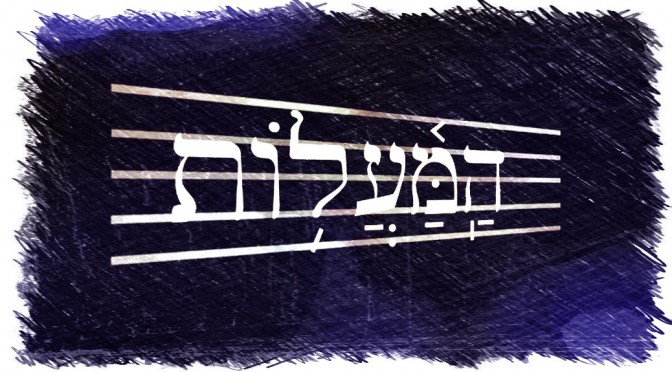
The heading hamma’eloth appears in a collection of fifteen psalms (120–134). The NKJV, NAS, NIV, and ESV all render the term of Ascents. The KJV has of Degrees. The phrase shir hamma’eloth consists of the noun shir (song) in Construct state (meaning it must be linked to the following term) [4] followed by the noun ma’elah in the plural with the definite article (ha) attached. The phrase is best translated A Song of the Ascents.

Marvin Tate in his commentary observes that all the songs tend to be brief and are pre-occupied with Zion, the City of God (Jerusalem). [5] They were sung by Israelites as they traveled to Jerusalem for worship at the Temple, especially during the three pilgrimage festivals each year: Passover, the Feast of Pentecost, and the Feast of Tabernacles. [6] Sendrey comments:

The short verses, written in an unaffected popular vein not found in other psalms, make it easy to believe that these songs of ascent gradually took shape among the yearly caravans of pilgrims that marched from all corners of Israel to the holy site of Jerusalem. In time they were probably made into a small songbook, whose collective title, “Songs of Ascent,” may have been affixed to each of the songs when the collection was taken into the Psalter. [7]

The Songs of the Ascents expressed the longings of the nation to be in Jerusalem at the time of these festivals and take part in the joyful celebrations in worship of God.

Some commentators have associated the Songs of the Ascents with physical aspects of the Temple, identifying them with the fifteen steps that lay between the Court of Women and the Court of the Israelites, as Sendrey explains:

The oldest rabbinical tradition connects these fifteen steps with the fifteen psalms referred to, saying that the Levites used to stand at the former, while singing the latter at the Feast of Tabernacles during the ceremony of the Water-libation. Since the number of the psalms and of the steps was identical, the rabbinic writers concluded that each psalm was sung on one of the steps. [8]

These steps (ascents) are mentioned in the description of the Temple in Ezekiel 40:26, 31.

Devotional

Four titles of application suggest appropriate expressions of devotion in worship at specific occasions: petition (in time of need), love (at a wedding), gratitude (for answered prayer), and sorrow (in time of affliction).

To Bring Remembrance

The heading to bring remembrance (lehazekir) appears in two psalms (38 and 70). It consists of the preposition to (le) and an infinitive construct verb from the root zkr in the Hiphil (causative active) stem meaning to mention or to remember. [9] In the Qal (simple active) the verb can mean he remembered, called to mind or he mentioned. [10] According to the TWOT, the term has three ranges of meaning: (1) “completely inward, mental” such as to think (about), to meditate (upon), to remember; (2) “mental accompanied by action” such as to pay attention (to); and (3) “forms of audible speaking” such as to mention, declare, recite, proclaim, invoke, commemorate, accuse, confess. [11] The TWOT concludes: “Cognate evidence indicates that the third group of meanings is closest to the verb’s root meaning.” [12] Concerning the origin of zkr, Klein states:

According to some scholars the original meaning of this base would have been “to prick, pierce”, whence “to fix in one’s mind” — to remember. [13]

While the root meaning of the term is clear: remembrance, scholars have debated as to what the Hiphil suggests, remembrance of God (commemoration) or from God (invocation). Klein suggests that the term in the Hiphil means: he caused to be remembered, he mentioned, or he commemorated. [14] The TWOT claims that the “meaning ‘to cause to remember’ for the Hiphils is dubious.” [15] The active nature of the stem seems to lean toward causing God to remember rather than causing God to be remembered.

The NIV favors this meaning, rendering the term a petition. Owens prefers the translation to invoke. [16] The NAS and ESV link the term to an act of worship in the Temple service, for a memorial and for the memorial offering. Peter Craigie explains in his commentary: “The word is sometimes associated with the ‘memorial offering’ … as described in Lev 2:2 and 24:7.” [17]

Along with the two psalm titles, the phrase to bring remembrance also appears in 1 Chronicles 16:4 where it describes one of the three activities to which the Levites were appointed. Through music they were to bring petition, invoking God’s care and remembrance of His people; give God thanks for all He did in His people’s behalf; and praise God’s name that He might be exalted, glorified and honored.

The content of the two psalms possessing the inscription also sheds light on the meaning. Psalm 38 begins: “O Lord, rebuke me not in your anger.” It continues with pleading and petition, concluding in verses 21–22: “Do not forsake me, O LORD; O my God, be not far from me! Make haste to help me, O LORD, my salvation.” Psalm 70 is also clearly a petition, beginning: “Make haste, O God to deliver me!” It concludes: “O LORD, do not delay.” In both psalms David is invoking God’s attention and remembrance. He is asking for God’s protection and care in the midst of suffering and trouble. David uses the same term used of Noah in Genesis 8:1, “and God remembered Noah.” Remembrance here does not refer simply to knowledge—that Noah would come to God’s mind. It rather implies action. God took special care of Noah and all on the ark. It is this care and concern that David earnestly seeks from God in these psalms.

Of Love

Psalm 45 bears the inscription a song of loves (shir yedidoth). The KJV, NKJV, and NAS translate the phrase as Song of Love. The ESV uses Love Song. The NIV has Wedding Song. In light of the content of the Psalm 45, Peter Craigie also favors wedding song. He comments:

There can be little doubt that this poetic composition originated in the wedding celebration for a particular king, composed for the occasion; subsequently, it would have been used frequently at royal weddings. [18]

The phrase shir yedidoth consists of the noun shir in Construct state followed by a plural adjective yedidoth. It is best rendered as A Song of Loves. The title is appropriate to the content of the psalm that not only depicts the beauty of a royal wedding, but also prophetically portrays the glory of Christ, the Messiah, and the beauty of His bride, the church.

For Thanksgiving

Psalm 100 begins with the inscription a psalm for thanksgiving (mizmor letodah). The KJV renders the term letodah of praise. The NKJV and NAS use the word thanksgiving. The NIV and ESV have for giving thanks. The noun todah is derived from the verb yadah which means to confess, praise or give thanks. [19] The TWOT explains:

This cognate noun, being derived from yada, basically means “confession,” either of sin or of God’s character and works. The term was employed uniquely in reference to the sacrificial system of Israel One could bring a “thank-offering” (or “praise-offering”) in which he would make declarations of praise to God and/or confession of sin to God as he offered his sacrifice. [20]

Owens prefers the translation for the thank offering, linking the psalm to its original use in the liturgy of the Temple accompanying the sacrifices. [21] According to the ceremonial law, a worshipper could bring a peace offering for giving thanks (Leviticus 7:12-15). Often these were offered in fulfillment of a vow, when God had heard and answered a plea or petition. This thanksgiving sacrifice is mentioned in Psalm 50:14-15 where Asaph writes:

Offer to God a sacrifice of thanksgiving,
and perform your vows to the Most High,
and call upon me in the day of trouble;
I will deliver you, and you shall glorify me.

As noted above with bringing to remembrance (offering petition), the giving of thanks (yadah) was one of the three primary duties of the Levites as they served God before the ark. [22] The title is fitting to the text as verse 4 of the psalm commands those who come to worship God:

Enter his gates with thanksgiving,
and his courts with praise!
Give thanks to him; bless his name!

For the Afflicted when he is overwhelmed and pours out his complaint

Psalm 102 is a prayer for the afflicted, for use by those who are physically suffering and need to cry out to God for relief. The noun ‘ani translated afflicted refers to those who are overwhelmed by want, poor, wretched or in misery. [23] The psalmist here contemplates his frailty in comparison to God’s firm endurance. Singing psalms is not just for the joyful and glad of heart. The rich content of the Psalms offers as well words for those suffering affliction and in anguish.

Didactic

One title of application found in the Psalter denotes a didactic use of the psalms. The Psalter has, along with its primary purpose of glorifying God, a secondary purpose of edifying the people of God. Through the singing of psalms as God is worshipped, His character and acts are proclaimed to the benefit of the church. His people can learn as they pray and sing and take comfort in the knowledge they gain of their God.

For Teaching

The inscription for teaching (lelammed) occurs in the longest title in the Psalter, the double heading of Psalm 60. The KJV and NAS render this heading to teach. The NKJV and NIV use for teaching. The ESV reads for instruction.

Marvin Tate notes that the heading for teaching implies that the psalm was written “to encourage or inform the people.” [24] An example of this application is seen in Deuteronomy 31:19 where Moses is commanded by God to write down (kithbu) and teach (lamdah) a song to the children of Israel. In this instance the song was to be “a witness for me against the people of Israel.”

Sendrey connects this title to the descriptive term michtam, which may denote a poem written down for the benefit of the community to teach and preserve truth:

The various psalms containing miktam originally may have formed a small independent collection, with Psalm 60 as the initial poem, expressing in its heading the purpose of the entire group, i.e., “to be taught to youth.” [25]

Conclusion

The titles of application help us understand some of the purposes for the psalms as they were used in Temple worship. The psalms provide the content for corporate worship: at the dedication of the Temple, on the Sabbath Day, and even on the journey to participate in gathered worship. We see various activities and situations in which God intends to invoke prayer and praise from His people in song: in times of joy (a wedding) and sorrow (when afflicted); in times of need (petition) and satisfaction (thanksgiving). We also see the value of the psalms in teaching us how to pray and how to praise our most worthy and exalted God.

Notes:

[1] 2 Chronicles 5–6.
[2] Alfred Edersheim, The Temple: Its Ministry and Services as They Were in the Time of Christ (New York: F. H. Revell, 1874; reprint, Grand Rapids, MI: William B. Eerdmans Publ. Co., 1987), 333–34.
[3] Alfred Sendrey, David’s Harp: The Study of Music in Biblical Times (New York: New American Library, 1964), 93.
[4] In Construct state shir would be translated into English song of.
[5] Marvin E. Tate, Psalm 51-100, Word Biblical Commentary, eds. David A. Hubbard, et al., vol. 20 (Dallas, Texas: Word Books, 1990), 220.
[6] See Exodus 23:14-17; 34:18-26; Leviticus 23; Deuteronomy 16:1-17.
[7] Sendrey, David’s Harp, 84.
[8] Alfred Sendrey, Music in Ancient Israel (New York: Philosophical Library, Inc., 1969), 99.
[9] William L. Holladay, A Concise Hebrew and Aramaic Lexicon of the Old Testament (Grand Rapids, MI: William B. Eerdmans Publ. Co., 1988), 89.
[10] Ernest Klein, A Comprehensive Etymological Dictionary of the Hebrew Language for Readers of English. (New York, MacMillian Publishing Company, 1987), 198.
[11] Theological Wordbook of the Old Testament [TWOT], 1:241.
[12] Ibid.
[13] Klein, Etymological Dictionary, 198.
[14] Ibid.
[15] TWOT, 1:242.
[16] John Joseph Owens, Analytical Key to the Old Testament (Grand Rapids, Mich.: Baker Book House, 1992), 2:735.
[17] Peter C. Craigie, Psalm 1-50, Word Biblical Commentary, eds. David A. Hubbard, et al., vol. 19 (Waco, TX: Word Books, 1983), 303.
[18] Ibid., 338.
[19] TWOT, 1:364.
[20] Ibid., 1:365
[21] Owens, Analytical Key to the Old Testament, 3:433.
[22] 1 Chronicles 16:4. “Then he appointed some of the Levites as ministers before the ark of the LORD, to invoke [bring petitions], to thank, and to praise the LORD, the God of Israel.”
[23] Holladay, A Concise Hebrew and Aramaic Lexicon, 278.
[24] Tate, Psalm 51-100, 101.
[25] Sendrey, David’s Harp, 85.

This series is based on a seminar paper for “Special Research in Church Music” at Southwestern Baptist Theological Seminary (May 1995).

See a Table of Contents (thus far) for this series: Lessons from the Psalm Inscriptions

(Scripture quotations are from the Holy Bible, English Standard Version (ESV) ©2001 by Crossway)
Into the Valley of the Shadow of Death

Now, at the end of this valley was another, called the Valley of the Shadow of Death, and Christian must needs go through it, because the way to the Celestial City lay through the midst of it. Now, this valley is a very solitary place. The prophet Jeremiah thus describes it: “A wilderness, a land of deserts and of pits, a land of drought, and of the shadow of death, a land that no man” (but a Christian) “passed through, and where no man dwelt.”

Now here Christian was worse put to it than in his fight with Apollyon, as by the sequel you shall see.

I saw then in my dream, that when Christian was got to the borders of the Shadow of Death, there met him two men, children of them that brought up an evil report of the good land, making haste to go back; to whom Christian spoke as follows:

Christian: Whither are you going?

Men: They said, Back! back! And we would have you to do so too, if either life or peace is prized by you.

Christian: Why, what’s the matter? said Christian.

Men: Matter! said they; we were going that way as you are going, and went as far as we durst; and indeed we were almost past coming back; for had we gone a little further, we had not been here to bring the news to thee.

Christian: But what have you met with? said Christian.

Men: Why, we were almost in the Valley of the Shadow of Death; but that, by good hap, we looked before us, and saw the danger before we came to it.

Christian: But what have you seen? said Christian.

Men: Seen! Why, the Valley itself, which is as dark as pitch; we also saw there the hobgoblins, satyrs, and dragons of the pit; we heard also in that Valley a continual howling and yelling, as of a people under unutterable misery, who there sat bound in affliction and irons; and over that Valley hangs the discouraging clouds of confusion. Death also doth always spread his wings over it. In a word, it is every whit dreadful, being utterly without order.

Christian: Then, said Christian, I perceive not yet, by what you have said, but that this is my way to the desired haven.

Men: Be it thy way; we will not choose it for ours. So, they parted, and Christian went on his way, but still with his sword drawn in his hand, for fear lest he should be assaulted.

I saw then in my dream, so far as this valley reached, there was on the right hand a very deep ditch; that ditch is it into which the blind have led the blind in all ages, and have both there miserably perished. Again, behold, on the left hand, there was a very dangerous quag, into which, if even a good man falls, he can find no bottom for his foot to stand on. Into that quag King David once did fall, and had no doubt therein been smothered, had not HE that is able plucked him out.

The pathway was here also exceeding narrow, and therefore good Christian was the more put to it; for when he sought, in the dark, to shun the ditch on the one hand, he was ready to tip over into the mire on the other; also when he sought to escape the mire, without great carefulness he would be ready to fall into the ditch. Thus he went on, and I heard him here sigh bitterly; for, besides the dangers mentioned above, the pathway was here so dark, and ofttimes, when he lift up his foot to set forward, he knew not where or upon what he should set it next.

Valley of the Shadow of DeathNo sooner did Christian come out of one difficult valley than he went down into one much worse. In the Valley of Humiliation Christian faced the reality of his own neediness and sinfulness. He confronted the enemy, Apollyon, the accuser of his soul, and he fought valiantly for truth. But now in the Valley of the Shadow of Death the way has become dark and clouded. The enemy is less clear. In the midst of trial and temptation Christian must face his doubts and fears and uncertainties. This second valley represents the struggles and oppression we face in our pilgrimage when we can no longer see clearly the light of the gospel. Truth is shrouded in darkness. Temptation and sin threaten to cast us down.

As Christian crosses the boundary between the valleys, he meets two men whom Bunyan describes as descendents of the ten spies in Numbers 13 who lacked faith and gave a bad report.

And they gave the children of Israel a bad report of the land which they had spied out, saying, “The land through which we have gone as spies is a land that devours its inhabitants, and all the people whom we saw in it are men of great stature” (Numbers 13:32).

Moses had sent twelve to spy out the Promised Land and only Joshua and Caleb had faith that God would conquer the inhabitants and give the land to Israel. The remaining ten were fearful and doubted God’s promise. Their lack of faith infected Israel and for forty years Israel wandered in the wilderness and was prevented from taking possession of the land.

Like the faithless spies, the two men fleeing the valley had turned back in fear and they encourage Christian to do the same. But Christian had learned perseverance on his journey. He saw the lesson in the House of the Interpreter of the Valiant Man determined to gain entrance to the Stately Palace. When he was climbing Hill Difficulty, he met Timorous and Mistrust who were running from the lions. They also encouraged Christian to turn back, yet Christian persevered until he came to Palace Beautiful. Christian understands that if he is to attain eternal life, the way at times will be hard and trying. And now the way has brought Him to the Valley of the Shadow of Death. There is no way around it. “The way to the Celestial City lay through the midst of it” and so “Christian must needs go through it.” There are more lessons for Christian to learn, even as he faces dark and difficult days.

Bunyan describes the valley as “a very solitary place.” Here we feel alone, isolated and even abandoned. No one can possibly understand what we are going through. It seems like God Himself has hidden His face. It is a wilderness full of danger—a place where we are spiritually parched, dry, drained and unsatisfied. Bunyan quotes from Jeremiah’s description of the wilderness where Israel wandered:

Neither did they say, “Where is the LORD,
Who brought us up out of the land of Egypt,
Who led us through the wilderness,
Through a land of deserts and pits,
Through a land of drought and the shadow of death,
Through a land that no one crossed
And where no one dwelt?”
(Jeremiah 2:6)

The path through this valley is narrow. The rocks and cliffs rise up all around blocking out the light. Spurgeon, in his message on Psalm 23:4, offers this description:

Get the idea of a narrow ravine, something like the Gorge of Gondo or some other stern pass upon the higher Alps where the rocks seem piled to Heaven and the sunlight is seen above as through a narrow rift. Troubles are sometimes heaped on one another, pile on pile, and the road is a dreary pass through which the pilgrim, on his journey to Heaven, has to wend his way. Set before your mind’s eye a valley shut in with stupendous rocks that seem to meet overhead, a narrowing pass, dark as midnight itself. Through this valley, or rocky ravine, the heavenly footman has to follow the path appointed for him in the eternal purpose of the Infinite mind. Through such a dreary rift many a child of God is making his way at this moment—and to him I speak (C.H. Spurgeon, “The Valley of the Shadow of Death” a sermon delivered on August 12, 1880, Metropolitan Tabernacle #1595).

It is a place covered in darkness (Job 3:4-5; 10:21-22); a place of misery and danger (Psalm 44:19); a place of bondage and affliction (Psalm 107:10). Bunyan describes some of his own experiences in this valley in Grace Abounding:

Again, as I was at another time very ill and weak, all that time also the tempter did beset me strongly, for I find he is much for assaulting the soul when it begins to approach towards the grave, then is his opportunity, laboring to hide from me my former experience of God’s goodness; also setting before me the terrors of death and the judgment of God, insomuch that at this time, through my fear of miscarrying for ever, should I now die, I was as one dead before death came, and was as if I had felt myself already descending into the pit; methought, I said, there was no way, but to hell I must; but behold, just as I was in the midst of those fears, these words of the angels carrying Lazarus into Abraham’s bosom darted in upon me, as who should say, So it shall be with thee when thou dost leave this world. This did sweetly revive my spirit, and help me to hope in God; which, when I had with comfort mused on a while, that word fell with great weight upon my mind, “O death, where is thy sting? O grave, where is thy victory?” (1Corinthians 15:55). At this I became both well in body and mind at once, for my sickness did presently vanish, and I walked comfortably in my work for God again.

At another time, though just before I was pretty well and savory in my spirit, yet suddenly there fell upon me a great cloud of darkness, which did so hide from me the things of God and Christ, that I was as if I had never seen or known them in my life; I was also so overrun in my soul, with a senseless, heartless frame of spirit, that I could not feel my soul to move or stir after grace and life by Christ; I was as if my loins were broken, or as if my hands and feet had been tied or bound with chains. At this time also I felt some weakness to seize upon my outward man, which made still the other affliction the more heavy and uncomfortable ‘to me.
[Grace Abounding to the Chief of Sinners, par. 260–261]

Bunyan notes that the path through the valley is hemmed in by a ditch on one side and a quag on the other. The ditch represents falling into sinful error. We stumble into its deep chasms when we are blind to the truth and believe what is false, when we fail to recognize and acknowledge sin as sin, when underestimate the power of temptation and treat sin lightly and casually. The quag on the opposite side of the path represents our being overtaken by sin and overwhelmed with doubts and fears and guilt. We sink in its mire when we are beaten down by temptations; when we are weighed down with despair and excessive sorrow; when we feel defeated by struggles and laid low by setbacks. When we try to avoid falling into the ditch by exposing our sins with truth, we are in danger of the quag, being overwhelmed with our exceeding sinfulness. When we try to avoid the quag by silencing our sins with hope of forgiveness, we are in danger of the ditch, being careless in our walk and presumptuous in our obedience. The only safe path through this dark valley is Christ. He is the way and the truth and the life. He keeps us from falling to the right or left. In Him we find forgiveness; the Law no more condemns us. And in Him we find strength to walk in newness of life; the Law is our delight.

David once fell into this quag. He prayed in Psalm 69 when his soul was overwhelmed:

Deliver me out of the mire,
And let me not sink;
Let me be delivered from those who hate me,
And out of the deep waters.
Let not the floodwater overflow me,
Nor let the deep swallow me up;
And let not the pit shut its mouth on me.
(Psalm 69:14-15)

And yet David learned to trust and rest in God, even in dark times. He prayed in Psalm 23:

Yea, though I walk through the valley of the shadow of death,
I will fear no evil;
For You are with me;
Your rod and Your staff, they comfort me.
(Psalm 23:4)

We must learn to have faith as David did. We must readily repent of sin and anchor our faith in the Lord Jesus Christ. We must receive the guidance and discipline of our kind Shepherd. Our path at times can be dark and uncertain. But it is God’s will and purpose that we walk such paths and learn more deeply to trust Him. Though the way may be clouded and unclear, we must press on to glory. Though we may not be able to see even where our next footstep will land, God is faithful and He will lead us safely home.

A Guide to John Bunyan’s The Pilgrim’s Progress
See TOC for more posts from this commentary

The text for The Pilgrim’s Progress and images used are public domain
Notes and Commentary ©2014 Ken Puls
Unless otherwise indicated, all Scripture quotations are from the New King James Version (NKJV) ©1982 by Thomas Nelson, Inc.

Lessons from the Psalm Inscriptions: Titles of Explanation

When David fled

Lessons from the Psalm Inscriptions
In Leading God’s People in Prayer and Praise

Titles of Explanation

Thirteen of the titles in the Psalter provide some historical information associated with the composition of the psalm. It appears likely from the brevity of the historical explanations that the titles were not meant to provide a detailed account of how the psalms came to be written. Rather the titles are for the benefit of those who would use the psalms in worship.

All 13 psalms that contain historical information relate to events in the life of David. These accounts support the fact that David, called “the sweet psalmist of Israel” in 2 Samuel 23:1, is the author of at least the 73 psalms in the Psalter bearing his name. Ten of the psalms describe circumstances from which David is seeking help and deliverance. Two psalms are devoted to returning thanks to God for deliverance. One psalm is a lament over sin.

Petitions and Pleas for Deliverance

PSALM 3: When he [David] fled from Absalom his son

This psalm is associated with the events in David’s life recorded in 2 Samuel 15:13-17 when David’s son, Absalom rebelled and sought to take his father’s throne. In 2 Samuel 15:13 David receives a message: “The hearts of the men of Israel are with Absalom.” David writes as he begins the psalm:

O LORD, how many are my foes!
Many are rising against me;
many are saying of my soul,
there is no salvation for him in God. Selah
(Psalm 3:1–2)

PSALM 7: Which he [David] sang to Yahweh concerning the words of Cush, a Benjamite

This heading connects Psalm 7 to the events of 2 Samuel 16:5–14. In this passage Shimei the son of Gera cursed David for defeating Saul and taking the throne. He called David a “bloodthirsty rogue.” David reflects on this curse in the psalm:


O LORD my God, if I have done this,
if there is wrong in my hands,
if I have repaid my friend with evil
or plundered my enemy without cause,
let the enemy pursue my soul and overtake it,
and let him trample my life to the ground
and lay my glory in the dust. Selah
(Psalm 7:3–5)

PSALM 52: When Doeg the Edomite went and told Saul, and said to him: “David has gone to the house of Ahimelech.”

This heading mentions Doeg, Saul’s chief herdsman. [1] Doeg was a wicked man who killed 85 priests at the command of Saul when the rest of the king’s servants refused. [2] In 1 Samuel 22:9 Doeg reported to Saul that David had gone to see Ahimelech the priest. This enraged Saul in a fit of jealousy and led to the murder of the Lord’s priests by Doeg.

Doeg apparently was proud of his deed, for David begins Psalm 52: “Why do you boast of evil, O mighty man?” In verses 7–8 David contrasts Doeg to himself:

“See the man who would not make God his refuge,
but trusted in the abundance of his riches
and sought refuge in his own destruction!”
But I am like a green olive tree in the house of God.
I trust in the steadfast love of God forever and ever.
(Psalm 52:7–8)

PSALM 54: When the Ziphites went and said to to Saul: “Is not David hiding with us?”

This heading relates Psalm 54 to the events recorded in 1 Samuel 23:14-29. David was hiding from Saul in the mountains in the wilderness of Ziph. 1 Samuel 23:15 explains that “Saul had come out to seek his life.” In verse 19 the Ziphites came to Saul and exposed David’s hideout. In Psalm 54:3 David prays:

For strangers have risen against me;
ruthless men seek my life;
they do not set God before themselves. Selah

God protected David and answered his opening plea “O God, save me by your name!” Before Saul could reach David a messenger came and diverted the king and his men to head off an invasion of the Philistines. [3]

PSALM 56: When the Philistines captured him [David] in Gath

In 1 Samuel 21:10-15 David is captured by the servants of Achish, king of Gath. In order to escape David pretended to be insane and then fled to the cave of Adullam, where the next psalm was likely composed.

PSALM 57: When he [David] fled from Saul into the cave

This psalm was likely composed shortly after Psalm 56. 1 Samuel 22:1 records that David escaped from Gath and fled to the cave of Adullam. Marvin Tate in his commentary suggests that this psalm may refer to David’s escape to a cave in the Wilderness of Engedi mentioned in 1 Samuel 24:1-3 since the heading specifies that David was fleeing from Saul. [4] However, since David was running from Saul when he went to Gath and this psalm is placed immediately following Psalm 56 in the Psalter, the cave of Adullam is more likely meant here.

The text of this psalm is appropriate to its heading. In verse 1 David asks for God’s protection until his troubles have passed and he refers to God as a refuge.

Be merciful to me, O God, be merciful to me,
for in you my soul takes refuge;
in the shadow of your wings I will take refuge,
till the storms of destruction pass by.
(Psalm 57:1)

PSALM 59: When Saul sent men, and they watched the house in order to kill him [David]

David composed this psalm before he became king of Israel. Saul was afraid of David and sought to have him killed. In the opening verses David declares his innocence in the matter and asks for God’s deliverance:

Deliver me from my enemies, O my God;
protect me from those who rise up against me;
deliver me from those who work evil,
and save me from bloodthirsty men.
For behold, they lie in wait for my life;
fierce men stir up strife against me.
For no transgression or sin of mine, O LORD
(Psalm 59:1–3)

The situation David describes here is recorded in 1 Samuel 19:1-18. Verse 11 states: “Saul sent messengers to David’s house to watch him, that he might kill him in the morning.” This account also speaks of David’s innocence as Jonathan defends David, asking his father: “Why then will you sin against innocent blood by killing David without cause?” [5] The account ends by describing God’s answer to the prayer expressed in Psalm 59 as David is yet again protected in God’s providence.

PSALM 60: When he [David] fought against Mesopotamia and Syria of Zobah, and Joab returned and killed twelve thousand Edomites in the Valley of Salt

This psalm is associated with David’s battles with Edom recorded in 2 Samuel 8:3–14 and 1 Chronicles 18:12–13. In the psalm David declares God’s sovereignty over all nations and God’s ability to bring all of David’s enemies into submission.

God has spoken in his holiness:
“With exultation I will divide up Shechem
and portion out the Vale of Succoth.
Gilead is mine; Manasseh is mine;
Ephraim is my helmet;
Judah is my scepter.
Moab is my washbasin;
upon Edom I cast my shoe;
over Philistia I shout in triumph.”
Who will bring me to the fortified city?
Who will lead me to Edom?
(Psalm 60:6–9)

The title of the psalm states that twelve thousand were in the Valley of Salt, whereas the historical accounts in 1 Samuel and 1 Chronicles both say eighteen thousand. This difference may be the result of two separate estimates of the number of dead. Another variation that appears in the accounts that may explain the different estimates for the number of dead is the one credited with the victory. In the psalm heading Joab, one of David’s generals, is credited with killing twelve thousand. In 2 Samuel 8:13 David himself is credited with killing eighteen thousand; and in 1 Chronicles 18:12 Abishai, another of David’s generals, is recognized as killing the eighteen thousand. Since all must have been involved in the conflict, all can take some credit for the victory. David makes it clear in the psalm, however, that it is God who must win the ultimate victory. In Psalm. 60:11–12 he prays:

Oh, grant us help against the foe,
for vain is the salvation of man!
With God we shall do valiantly;
it is he who will tread down our foes.

Concerning the location of the battle mentioned in the heading, Tate comments:

The precise location of the Valley of Salt is unknown, but it probably refers to one valley or another in the region of the Dead Sea, probably in Edomite territory. [6]

In spite of this victory, the psalm implies that David was concerned that God may have been displeased with Israel and intent on using David’s enemies to chastise the nation. He begins his prayer to God:

O God, you have rejected us, broken our defenses;
you have been angry; oh, restore us.
(Psalm 60:1)

PSALM 63: When he [David] was in the wilderness of Judah

This heading links Psalm 63 to David’s time in the wilderness of Judah. It may refer to the events in 1 Samuel 23:14 – 24:1, the same situation that produced Psalm 54, or 2 Samuel 15:23 when David flees from his son, Absalom, the situation of Psalm 3. The psalm is expressive of the imagery of a wilderness. David describes in verse 1 “a dry and weary land where there is no water.” Even in the midst of this trouble David is confident that God will preserve him, saying in the final verse: “But the king shall rejoice in God.”

PSALM 142: When he [David] was in the cave

This is the only title of explanation to appear in the Psalter after Psalm 63. The heading is not specific as to which situation in David’s life the psalm refers. It may refer either to 1 Samuel 22:1 or 24:3. Again David refers to the Lord in this psalm as his refuge. [7]

Praise And Thanksgiving for Deliverance

PSALM 18: Which he [David] spoke to Yahweh the words of this song on the day that Yahweh delivered him from the hand of all his enemies and from the hand of Saul

The heading to Psalm 18 emphasizes an important aspect of prayer in the Scripture. In many of the headings described above David made passionate requests of God to save him and deliver him from trouble. God was faithful to David and protected him throughout his life as the historical accounts in Scripture make abundantly clear. Prayer, however, must not stop with God’s answer. Petitions must give way to praise and thanksgiving as God’s will is made known through providence.

Consider how David begins his prayer in Psalm 18:

I love you, O LORD, my strength.
The LORD is my rock and my fortress and my deliverer,
my God, my rock, in whom I take refuge,
my shield, and the horn of my salvation, my stronghold.
I call upon the LORD, who is worthy to be praised,
and I am saved from my enemies.
(Psalm 18:1–3)

Psalm 18 is repeated in 2 Samuel 22, where it appears in the context of a historical narrative. It is difficult to specify the exact day mentioned in the title, as Peter Craig explains in his commentary:

The title indicates that the song was used on the day that David was delivered from enemies in general and from Saul in particular. Yet the context of the title in the parallel passage (2 Sam 22) does not permit the identification of the psalm with a particular event or military victory; it follows an account of Saul’s death and then a summary account of a series of military campaigns against the Philistines (2 Sam 21:15-22). It may have been employed in a celebration of victory after a series of campaigns, or it may be interpreted as having been used in one of Israel’s great annual festivals. [8]

Like the heading to the Psalm, the final verse points to David as the author of the psalm:

Great salvation he brings to his king,
and shows steadfast love to his anointed,
to David and his offspring forever.”
(2 Samuel 22:51)

PSALM 34: When he [David] pretended madness before Abimelech, who drove him away and he departed

In Psalm 34 David expresses thanksgiving to God for answering his prayers of Psalm 56 and 57. In Psalm 56 David cried out to God to save him from his captors in Gath. He pretended to be insane so Abimilech, king of Gath, would be afraid and let him go. [9] In Psalm 56:12 David promised God: “I will render thank offerings to you.” In Psalm 57:9 he said : “I will give thanks to you, O Lord, among the peoples; I will sing praises to you among the nations.” In Psalm 34 David is true to his word and expresses his thanks to God. Psalm 34 begins:

I will bless the LORD at all times;
his praise shall continually be in my mouth.
(Psalm 34:1)

God was indeed a refuge for David during his troubles. Psalm 34 continues:

I sought the LORD, and he answered me
and delivered me from all my fears.
Those who look to him are radiant,
and their faces shall never be ashamed.
This poor man cried, and the LORD heard him
and saved him out of all his troubles.
The angel of the LORD encamps
around those who fear him, and delivers them.
(Psalm 34:4–7)

Repentance and Sorrow over Sin

PSALM 51: When Nathan the Prophet went to him [David] after he had gone in to Bathsheba

Psalm 51 is lamentation of David where he repents of his sin against God and grieves over the wickedness of his heart. Remorse and grief over sin is an experience common to all who are truly God’s people, even a great king who is called in 1 Samuel 13:14 “a man after God’s own heart.” David’s sin is recorded in 1 Samuel 11 where David took Uriah’s wife and had Uriah killed. In 1 Samuel 12 Nathan the prophet was sent to David and through a parable forcefully exposed David’s sin, saying in verse 7: “You are the man!” In Psalm 51 David asks for God’s mercy and confesses that his sin is primarily against God Himself. [10]

John explains in the New Testament, “If we say we have no sin, we deceive ourselves, and the truth is not in us (1 John 1:8).” All Christians struggle with remaining sin, and thus this psalm highlights an important element of public worship, the confession and expiation of sin.

Conclusion

As with the titles of designation, the titles of explanation highlight the historical connection of the psalms with individual songwriters. There are times when it is beneficial to know the circumstances surrounding the composition of a song. The music of worship is often forged in the crucible of life’s trials and afflictions. We see in the psalm inscriptions how David’s words, prayed and sung in the psalms, are tied to events and experiences in his life. Most of the situations that gave occasion for David’s compositions were not situations that David would have chosen for himself. They were hard and painful. And yet through them God showed His power and faithfulness, in hearing and answering prayer.

When you read through the psalms, you will find many personal declarations of petition and praise. Although the Psalter served as the song book for the gathered worship of God’s people in the Old Testament, most of the psalms are voiced in the first person singular (note the many uses of the pronouns “I” and “me” and “my” throughout the psalms). When the personal prayers of David and other psalmists were included in the Psalter, the lyrics were not changed to “we” and “us” in an effort to make the songs sound more corporate in their expression. Instead, the words were left as written with titles of explanation added where needed in the inscriptions.

Why are such personal expressions of worship included in the psalms? Why is it fitting for us to pray and sing about personal struggles and praise even in a corporate setting? There are at least two reasons:

    1. Many of the struggles that we experience are personal struggles—we face them individually. The testimony of God’s Word makes this evident. This is part of what makes the Psalms and all of Scripture so real and so relevant and so accessible for the child of God. It speaks to us and for us where we are—and points us always to our only hope in God and His provision in the gospel of Christ.
    2. As sinners saved by grace, walking together in this world on our way to a better place, we all experience similar struggles—we share many of the same joys and sorrows and temptations and trials. This is why we can read David’s prayers in Scripture and it seems that he is praying our words, speaking our sorrows, lifting our praise. What began as a personal prayer, in God’s providence was set down to become the voice of all God’s people.

The Psalms are useful to us, not only to serve as the very words we pray and lift up as praise, as we sing and pray and read the psalms in worship, but they serve to teach us how to pray—what to pray for—how to persevere in prayer—how to praise—when to praise. And they demonstrate how our own prayers, poured out in the midst of real-life struggles, can benefit and serve the people of God as a whole. What we pray as individuals, in part shapes the voice of the church as a whole.

When Christians pray in gathered worship about personal trials or tragedies, we share their pain. We may recognize similar needs in our own lives. Their prayer is magnified as it provokes more prayer in us. When songwriters compose music for the church, born out of their own joys and sorrows, their hope in God and love for Him is magnified. We sing their words in corporate worship and add our voices to their prayers and praise. This was David’s intent, as he drew from his own experiences to shape the praise of God’s people. He declares in Psalm 34:

I will bless the LORD at all times;
his praise shall continually be in my mouth.
My soul makes its boast in the LORD;
let the humble hear and be glad.
Oh, magnify the LORD with me,
and let us exalt his name together!
(Psalm 34:1-3)

Notes:

[1] 1 Samuel 21:7.
[2] 1 Samuel 22:6-18.
[3] 1 Samuel 23:27.
[4] Marvin E. Tate, Psalm 51-100, Word Biblical Commentary, eds. David A. Hubbard, et al., vol. 20 (Dallas, Texas: Word Books, 1990), 76.
[5] 1 Samuel 19:5.
[6] Tate, Psalm 51-100, 105.
[7] Psalm 142:5.
[8] Peter C. Craigie, Psalm 1-50, Word Biblical Commentary, eds. David A. Hubbard, et al., vol. 19 (Waco, TX: Word Books, 1983), 172-73.
[9] 1 Samuel 21:10–15.
[10] Psalm 51:4.

This series is based on a seminar paper for “Special Research in Church Music” at Southwestern Baptist Theological Seminary (May 1995).

See a Table of Contents (thus far) for this series: Lessons from the Psalm Inscriptions

(Scripture quotations are from the Holy Bible, English Standard Version (ESV) ©2001 by Crossway)